
Frequently Asked Questions
-
Despite free public education, rural families especially from historically marginalized communities cannot afford essential school supplies for their children. Without access to uniforms, books, bags and other educational materials, the children are forced to quit school.
-
In order to protect our students’ privacy, we kindly ask that you contact us directly if you have any questions or would like additional information. We will be happy to assist and do our best to provide you with the information we can share.
-
SEE Nepal collects updates of sponsored students six months after sponsorship begins, followed by annual updates at the end of each academic year.
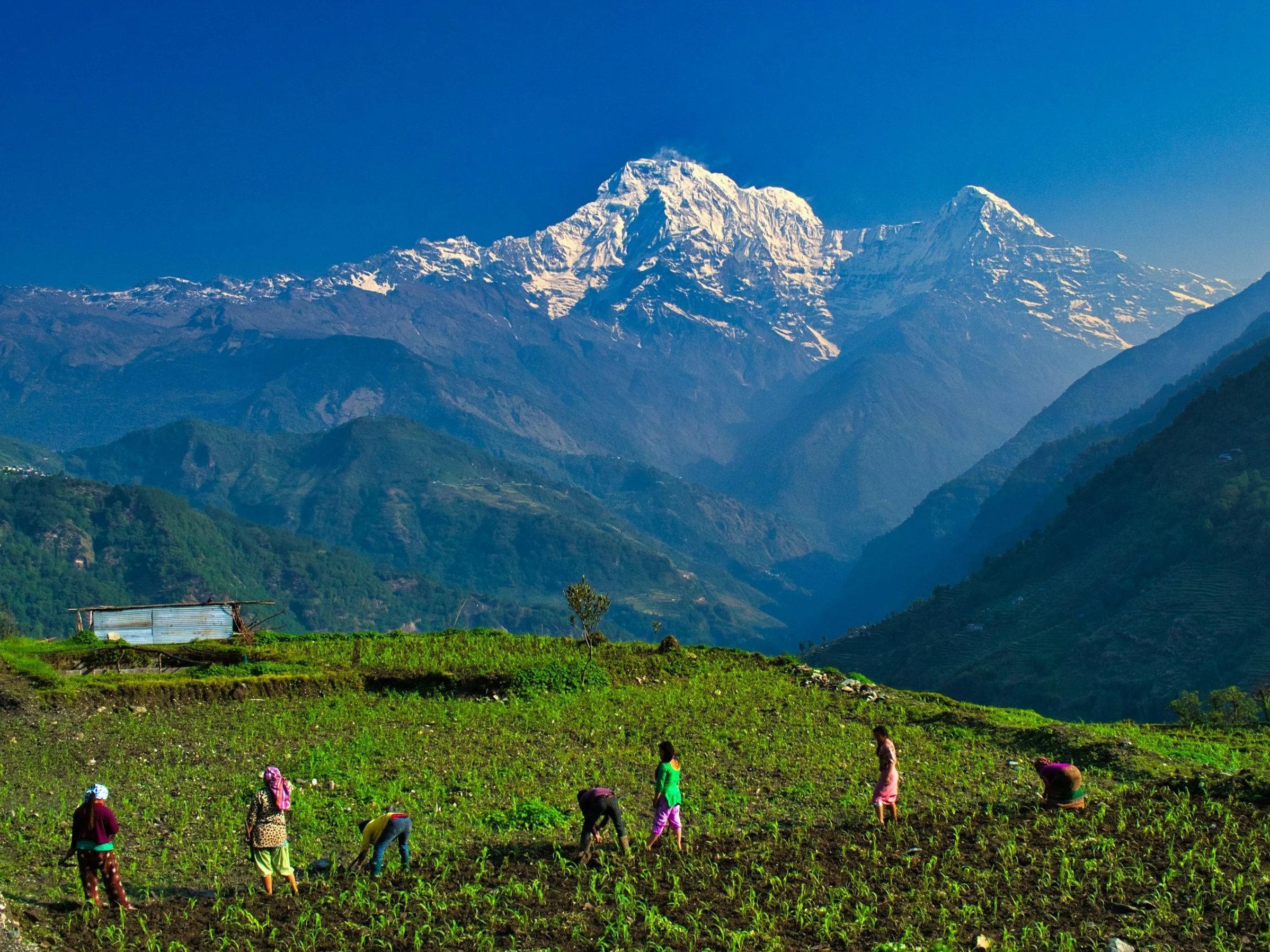
Reaching some of the schools and students can be challenging due to remote locations and limited road access. In some cases, our dedicated field volunteers need to walk for more than four hours to reach the communities. Despite these challenges, our team remains committed on visiting students and gathering updates to help sponsors stay connected with the children they support.
If you have any questions regarding updates, feel free to reach out to us directly.
-
Students for SEE scholarships are selected through a community-based process designed to identify families facing the greatest financial challenges while supporting students who are committed to their education.
Selection Criteria
To be considered for an SEE scholarship, a student’s family generally meets the following criteria:
The family owns land that is insufficient to provide enough food for the entire family throughout the year.
No one in the family has permanent employment, such as a teaching position or a job in a government or private organization.
The family depends primarily on subsistence farming for its livelihood.
The student is performing well in school.
Our field staff present the profiles of eligible applicants at the monthly meeting of the local Community Group (CG). The CG discusses each case and unanimously selects the students who are most in need of support. Selected students must be the son or daughter of a Community Group member.
Monitoring and Follow-Up
After a student receives the SEE scholarship, the Community Group continues to monitor the student and the family to ensure that the scholarship is supporting the student's education. The CG monitors whether:
The sponsored student regularly attends school.
The student continues to pass their examinations.
The student has not dropped out of school.
The student has not married during the scholarship period.
The Community Group remains responsible for monitoring and supporting the student after the scholarship has been awarded.
-
Scholarships for Education and Enterprise(SEE) Nepal is a volunteer-led, community-driven initiative that developed the program and serves as its fundraising arm in the United States.
SEE Nepal has partnered with Nepal Rising (Daayitwa US), a registered a 501(c)(3) non-profit organization in the United States to receive tax-deductible donations and securely transfer the funds to Nepal in support of the program.
Nepal Sahayata Foundation is a registered non-profit organization in Nepal and is our in-country implementing partner, working closely with community-based organizations to deliver and manage the program at the local level.
-
Donations are collected in the United States through Nepal Rising (Daayitwa US) as part of the SEE Nepal fundraising campaign. Once funds for 10 students have been collected, they are transferred to Nepal Sahayata Foundation in Nepal, our in-country implementing partner. This helps us reduce transaction and transfer costs and direct more funds toward scholarships.
-
Our field staff deliver the scholarship funds in cash to the Chairperson or another designated representative of the Community Group (CG) during the group’s monthly meeting.
To make the process transparent and accountable, teachers or the Principal from the student’s school, the Ward Chief, and other respected members of the community are also invited to the scholarship handover.
During the meeting:
Our field staff explain the terms and conditions of the SEE Scholarship.
The Community Group explains how the particular student was selected.
The Ward Chief, school Principal, or CG Chairperson formally hands the scholarship funds to the student and their guardian, usually the student’s mother, who is a member of the CG.
Following the handover, our field staff provide photographs of the Community Group meeting, the scholarship handover, and thank-you letters from the students. These records help us verify that the scholarship funds have been received by the intended student and guardian.
-
While our initial efforts supported students across seven districts in Nepal, we are now focusing our program in the rural communities of Jajarkot and Dang districts to strengthen our impact and provide more sustained support. With support, we hope to grow and expand the areas of the program.
-
At present, we are working in two districts of Nepal: Jajarkot and Dang. While Dang is a relatively flat valley where the villages of sponsored students can generally be reached by motorbike, Jajarkot presents a very different terrain. In Jajarkot, many villages are located in remote and mountainous areas, requiring us to walk to reach the communities and sponsored students.